
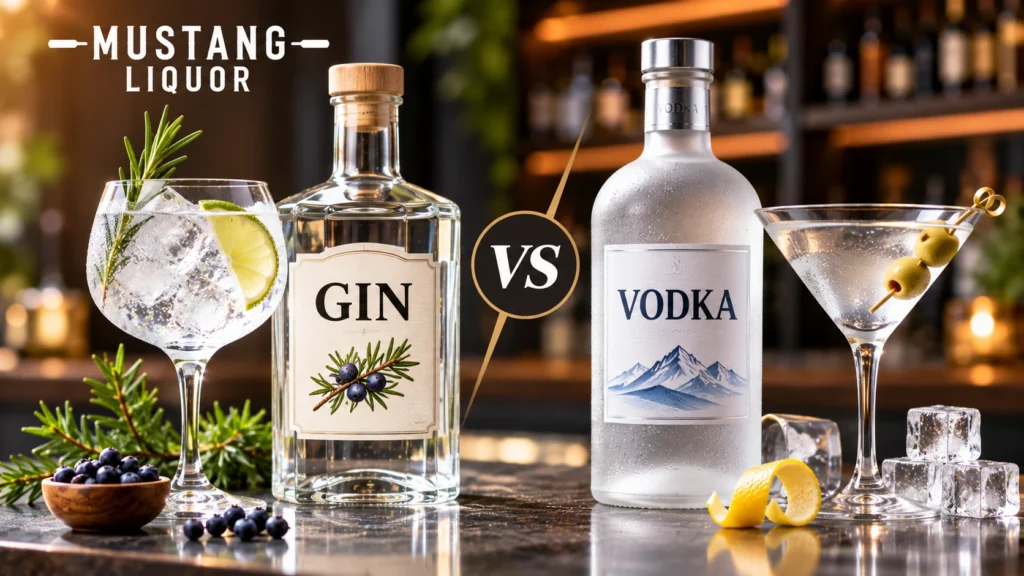
When comparing gin vs vodka, the biggest difference comes down to flavor. Both are versatile distilled spirits used in popular cocktails, but they offer very different drinking experiences. Gin is known for its botanical character, especially juniper, while vodka is generally prized for its clean, neutral taste.
Whether you are preparing cocktails at home, shopping for a weekend gathering, or choosing a bottle for your personal collection, understanding these differences can help you make a better decision.
For shoppers exploring different spirits at Mustang Liquor, knowing what separates gin from vodka makes it easier to find a bottle that matches your preferences and the drinks you enjoy.
Gin vs. Vodka Difference: What Sets Them Apart?
Gin and vodka are both distilled spirits, but their flavor and production approaches are different.
Gin is a spirit flavored predominantly with juniper berries. Other botanicals, including coriander, citrus peel, angelica root, cardamom, and herbs, may also contribute to its aroma and taste. These ingredients give gin its recognizable herbal, floral, citrusy, or spicy character.
Vodka, on the other hand, is generally produced to have a neutral flavor and aroma. It can be made from different agricultural materials, including grains and potatoes. Its purpose is often to provide a smooth spirit that blends easily with other cocktail ingredients.
The easiest way to remember the difference is that gin brings its own distinctive flavor to a drink, while vodka allows the other ingredients to take the lead.
Understanding the Gin Flavor Profile
The gin flavor profile is one of its biggest distinguishing features.
Juniper is the defining botanical in gin and gives the spirit its characteristic pine-like, slightly resinous taste. Depending on the recipe, other botanicals can add layers of citrus, pepper, spice, floral notes, or earthy flavors.
Different gin styles can taste noticeably different.
- London Dry Gin: Traditionally dry, juniper-forward, and often citrusy.
- Contemporary Gin: May emphasize floral, fruity, herbal, or unusual botanical combinations.
- Old Tom Gin: Generally offers a softer and sometimes sweeter character.
- Navy Strength Gin: A higher-proof style with a more concentrated flavor and stronger alcoholic intensity.
Gin works particularly well in cocktails where botanical character is an important part of the overall taste.
If you enjoy herbal aromas, citrus notes, and a spirit with a recognizable personality, gin may be worth exploring.
Understanding the Vodka Flavor Profile
The vodka flavor profile is generally much more restrained.
Vodka is commonly described as clean, neutral, and versatile. Depending on the ingredients and production methods, individual bottles can still have subtle differences in texture, aroma, and taste.
Some vodkas may have a slightly creamy or soft mouthfeel, while others can feel crisp and light.
Because vodka does not typically introduce strong botanical flavors, it works well with ingredients such as fruit juices, soda, tonic water, citrus, and flavored mixers.
Vodka is especially popular in cocktails where the goal is to highlight the other ingredients rather than introduce a strong spirit character.
For shoppers who prefer a straightforward spirit that can be used in several different drinks, vodka is often a practical choice.
Gin vs. Vodka: Which Is Better for Cocktails?
The choice of vodka or gin for cocktails depends on the drink you want to prepare and the flavor you prefer.
Gin is excellent for cocktails that benefit from botanical complexity. Vodka is often preferred when a cleaner, more neutral base is desired.
Here are some popular examples.
Popular Gin Cocktails
Gin and Tonic: Combines gin with tonic water, usually served over ice with a citrus garnish. The botanicals of the gin complement tonic’s bitterness.
Negroni: A classic combination of gin, sweet vermouth, and Campari. It delivers a bold, bitter, and botanical flavor.
Tom Collins: Made with gin, lemon juice, sugar, and soda water. It is refreshing, citrus-forward, and easy to enjoy.
Dry Martini: Traditionally prepared with gin and dry vermouth, often finished with an olive or lemon twist.
Popular Vodka Cocktails
Moscow Mule: Combines vodka, ginger beer, and lime juice for a refreshing drink with a spicy finish.
Cosmopolitan: Made with vodka, orange liqueur, cranberry juice, and lime.
Vodka Martini: Uses vodka and dry vermouth to create a cleaner, more neutral variation of the classic Martini.
Bloody Mary: Combines vodka with tomato juice, citrus, and savory seasonings for a distinctive brunch cocktail.
You can explore different spirit categories through the Mustang Liquor shop when deciding which bottles to consider for your home bar.
Gin and Vodka Cocktail Differences
The main gin and vodka cocktail differences come from how each spirit interacts with the other ingredients.
In a Gin and Tonic, the botanical flavors of gin are an important part of the drink. Replacing gin with vodka changes the character considerably, producing a cleaner drink without the same juniper and herbal notes.
Similarly, a vodka-based Mule is generally focused on ginger beer and lime, while using gin introduces additional botanical flavors.
This difference matters when following cocktail recipes. Even though gin and vodka can sometimes be substituted for one another, the final drink will not taste exactly the same.
If you are experimenting at home, try preparing the same simple cocktail with both spirits. Comparing the two versions is an easy way to discover which flavor profile you prefer.
What Is the Best Spirit for a Martini?
Choosing the best spirit for a Martini depends largely on your taste preferences.
A traditional Dry Martini is commonly associated with gin and dry vermouth. Gin’s botanical character gives the drink added aroma, complexity, and herbal flavor.
A Vodka Martini uses vodka instead. The result is generally smoother and more neutral, allowing the vermouth and garnish to contribute more of the overall character.
The garnish also makes a difference. Olives add a savory element, while a lemon twist introduces fresh citrus aromas.
Neither version is automatically better. If you enjoy botanical flavors, choose gin. If you prefer a cleaner and less aromatic drink, vodka may suit you better.
How to Choose Between Gin and Vodka
Before choosing a bottle, think about how you intend to use it.
If you enjoy botanical cocktails such as Gin and Tonics, Negronis, and Tom Collins drinks, gin is a natural starting point.
If you prefer drinks such as Moscow Mules, Cosmopolitans, and Bloody Marys, vodka may be more suitable.
Your personal flavor preferences matter too. People who enjoy herbal, citrusy, and complex flavors may prefer gin. Those who like a neutral spirit that works with different mixers may lean toward vodka.
Budget is another consideration. You do not necessarily need an expensive bottle to prepare enjoyable cocktails. Start with a dependable standard bottle and explore premium varieties as your preferences become clearer.
Shoppers interested in higher-end bottles can also browse the Mustang Liquor Premium Collections.
It is also worth checking current Mustang Liquor specials before making a purchase.
Finding Gin and Vodka at Mustang Liquor
If you are comparing gin and vodka for your next home bar purchase, Mustang Liquor is a local option for exploring different spirits in Mustang, Oklahoma.
Think about the cocktails you regularly prepare, how often you use each spirit, and whether you want something for everyday mixing or a special occasion.
Before visiting, check with the store if you are looking for a particular brand, bottle size, or premium selection. Online product categories can help you browse, but they should not be treated as a guarantee of current shelf availability.
You can learn more about the store through the Mustang Liquor About page. For questions about specific bottles or availability, use the Contact page or call the store directly.
For additional spirit comparisons and beverage shopping information, visit the Mustang Liquor blog.
Frequently Asked Questions
What is the main difference between gin and vodka?
The main difference is flavor. Gin is flavored predominantly with juniper and other botanicals, giving it a distinctive herbal and aromatic character. Vodka is generally produced to have a more neutral flavor, making it versatile for different cocktails and mixers.
Is gin stronger than vodka?
Neither spirit is automatically stronger than the other. Alcohol content varies by brand and bottle. Always check the alcohol by volume (ABV) printed on the label rather than assuming one category has a higher alcohol content.
Can you substitute vodka for gin in cocktails?
Yes, vodka can replace gin in some cocktail recipes, but the flavor will change. Vodka provides a more neutral base, while gin contributes juniper and botanical notes. The substitution works best when you want a cleaner version of a drink.
Which is better for a Martini, gin or vodka?
Gin is the traditional choice for a Dry Martini and provides distinctive botanical flavor. Vodka creates a cleaner and more neutral variation. The better option depends on whether you prefer herbal complexity or a smoother, less aromatic character.
Does gin taste like vodka?
No. Gin generally has a recognizable juniper-forward, botanical taste, while vodka is usually much more neutral. Their different flavor profiles make them suitable for different cocktails and drinking preferences.
Which spirit should beginners choose, gin or vodka?
Vodka can be a straightforward starting point for people who prefer neutral flavors and simple mixed drinks. Gin is worth trying for those who enjoy herbs, citrus, and botanical aromas. Choosing a spirit based on the cocktails you enjoy is a practical way to start.